Updated 7/14
Our Star Peru flight to Pucallpa left Lima at 10:35 AM. The flight was smooth over the Andes. Below us, thin roads snaked up mountain sides to small villages. As the mountains got higher, the villages got smaller. Soon we were over the mountains and dark green jungle began to unfold beneath us. Large white thunderclouds filled the sky.
When our plane neared Pullcapa, we descended into a cloud. The windows were gray and streaked with rain. We passed beneath the cloud ceiling, I could see the runway beneath us. The plane bounced through turbulence. The pilot applied power, climbed out of the clouds and circled for another try. The second attempt was worse than the first. We flew the length of the runway with the starboard wing several feet lower than the port wing.
The pilot pulled up again. After a few minutes he came on the intercom and said in Spanish and English, "Pucallpa airport is closed because of weather. We are flying to an alternate airport."
We flew for twenty minutes and set down at a small sunlit runway. I asked the businessman sitting next to me if it was Iquitos. He said no and went back to reading his email on his Galaxy Tab computer. We stopped and the crew opened the front and rear hatches to ventilate the passenger compartment. I got up and walked to the bathroom. The door to the cockpit was open and the co-pilot was looking at a map and talking to the pilot. The co-pilot looked very young.
After a few minutes the crew closed the hatches. The engines spun up, and we took off again. I thought we were returning to Lima, but twenty minutes later we landed in Pucallpa. The landing was smooth and flawless on a dry sunlit runway.
A Pucallpa resident who watched us try to land earlier said ten minutes after we tried to land, the storm was gone and the sun was shining.
Update 1: I liked Star Peru and would not hesitate to fly with them again.
Update 2: A pilot friend tells me that the main problem with landing at small airports (everywhere) is the lack of ground control facilities at some small airports. Without ground control, the pilot has to make a visual landing. With ground control, the pilot can make an instrument landing.
Friday, July 13, 2012
Thursday, July 12, 2012
Buying a portable broadcast quality audio recorder
Small, professional, broadcast quality audio recorders have advanced remarkably in the past few years. Today's versions are cheaper, of higher quality, and are easier to use than ever before.
(If you only want an inexpensive voice recorder, skip this post.)
B and H Photo has an excellent primer on what to look for in a portable digital recorders, and how they differ from normal "voice recorders" here:
http://www.bhphotovideo.com/indepth/audio/buying-guides/portable-digital-rec
orders
A few models worth considering:
Roland R-26
Tascam DR-100
Zoom H4N
Fostex FR-2LE
I recommend buying from B and H Photo because of their excellent customer service and 7 day return policy.
When the recorder arrives, spend a few hours recording test interviews. If the recorder controls are not intuitive and easy to use, return it to B and H and try another model.
(If you only want an inexpensive voice recorder, skip this post.)
B and H Photo has an excellent primer on what to look for in a portable digital recorders, and how they differ from normal "voice recorders" here:
http://www.bhphotovideo.com/indepth/audio/buying-guides/portable-digital-rec
orders
A few models worth considering:
Roland R-26
Tascam DR-100
Zoom H4N
Fostex FR-2LE
I recommend buying from B and H Photo because of their excellent customer service and 7 day return policy.
When the recorder arrives, spend a few hours recording test interviews. If the recorder controls are not intuitive and easy to use, return it to B and H and try another model.
Monday, July 9, 2012
Buying a hat from 5000 miles away
| The ideal hat: an Outdoor Research Sombriolet Sun Hat |
Two days before leaving on my trip, I still didn't have a good sun hat. In her letters, the tour leader said to bring a good hat because the tropical sun is brutal.
I stopped my last-minute packing, jumped in the car and drove to REI Santa Rosa to look for a hat. After trying on several hats, I finally chose a broad brimmed canvas hat. Just to be sure I had the right one, I asked one of the REI employees "Would this be a good hat for the Amazon rain forest?"
"No. You've chosen a canvas hat. It will be wet, heavy and hot. I'd recommend getting one of the waterproof hats made by Outdoor Research." (The REI employee was right. The humidity is so high in the jungle that the canvas hat would have been wet, heavy, hot and unwearable within an hour. It would have been covered with white mold within a week.)
Back to the REI hat rack. All their Outdoor Research hats were gone. A quick search on my smart phone showed a big-box "sports equipment" store nearby. I drove to the store. The bored clerks knew nothing about hats and cared less. I finally remembered Sonoma Outfitters in Railroad Square. Back in the car for a trip across town. Sonoma Outfitters had the hat, and in my size! I reluctantly paid for the expensive hat, returned home and finished packing.
Three days later I was in Peruvian jungle, where I learned what the locals wore. Baseball caps. Just like the one I left lying in the back of my car.
Moral, "Don't buy a hat from 5,000 miles away."
| The hat the locals wear |
Friday, July 6, 2012
Re-entry after a vacation in the Amazon
I am slowly re-entering the world of blogs, hot showers, and email after two weeks in the Amazon basin. No phone, no email, no electricity. No news, no politics and no advertising.
We climb a small hill, stepping from slippery rock to slippery rock. I stumble, and reach out instinctively to brace myself against a tree. The guide yells a warning and I barely avoid impaling my palm on a dozen of the three-inch-long poisonous needles that cover the tree's trunk.
I do my morning yoga on a river beach. 100 feet above, the sun slowly burns away a light grey mist to reveal lacy branches of the forest canopy.
Brilliantly colored birds, butterflies, and insects. Large, black spiders with eyes that gleam redly in the night. Ants. All kinds of ants.
Soon I will probably be writing about how to structure, write and market books.
But not yet.
Monday, July 2, 2012
Seth Godin watches the price of media fall
"A New York City publisher probably needs $2000 a page to acquire,
edit, typeset, print and distribute a book (making up a number from thin
air). A self-published ebook author needs $1 a page.
That’s not a cost-efficiency. That’s a totally different industry.
But the if the viewer/reader doesn’t treat the two products as
fundamentally different, if reading or watching one is a replacement for
the other, then a crisis is right around the corner." Seth Godin
That’s not a cost-efficiency. That’s a totally different industry.
![]() |
| Free media -- grafitti in Lima Peru |
Sunday, July 1, 2012
The Amazon is gone.
Update below: images from space
Written in a hotel in Lima, Peru upon returning from the Amazon rain forest.
Two days ago I was in the Amazon. Nothing prepared me for the beauty of the place. Or it's immensity.
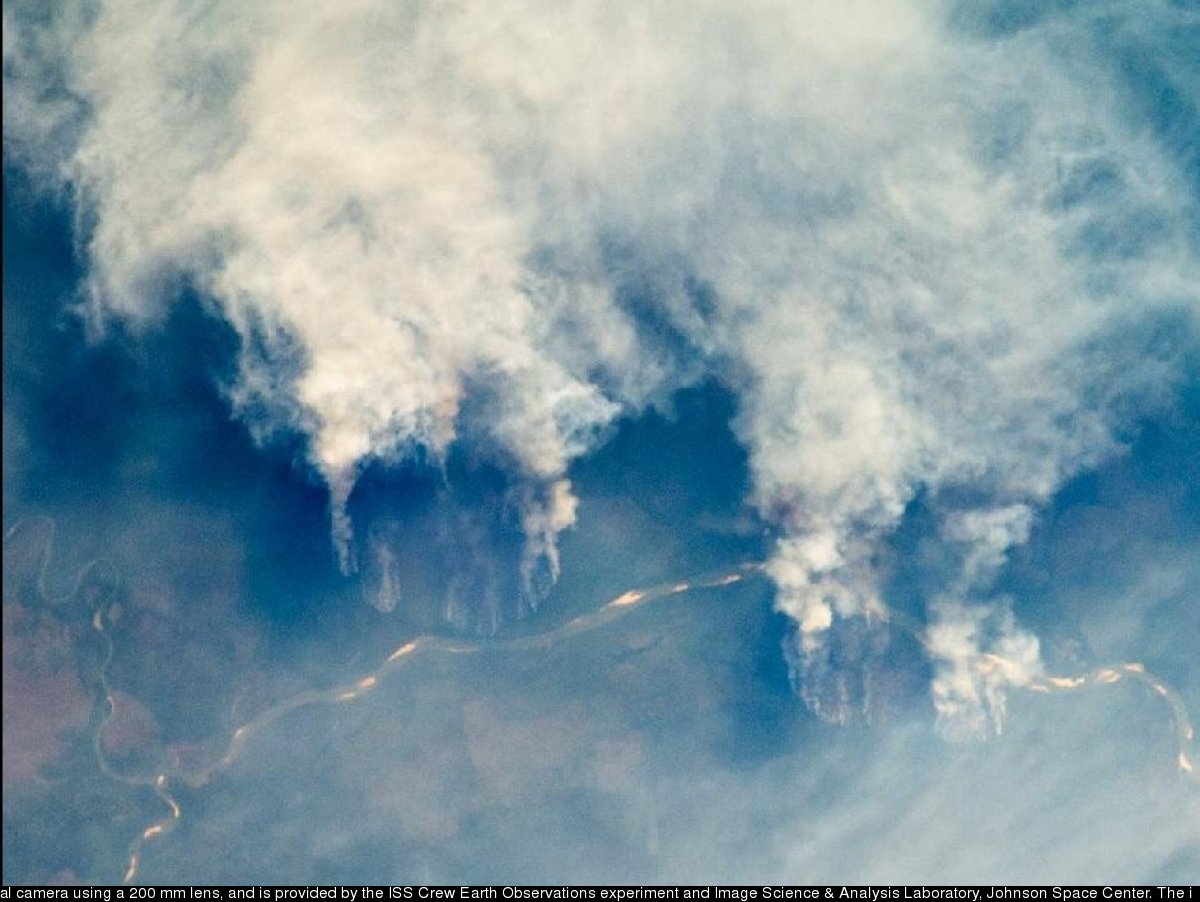
Early in my trip we flew over the Peruvian Amazon forest on the way to Pucallpa. I was stunned by the extent of clear-cutting, logging, farming, oil drilling. Throughout the flight I saw massive plumes of smoke from slash-and-burn clearing operations. We flew over patch after patch of cleared, cultivated land. I remember thinking, "The Amazon is gone. Get over it. It's gone."
Update 1: Pictures from space
The fires are so large they can be seen from space. The Brazilian Amazon rain forest, as seen from the International Space Station in 2011.
Update 2: Peru increases protection of the Amazon
The Peruvian government has allocated significant funds to help protect a large swathe of the Amazon, home to several endangered species and indigenous groups.
The Peruvian National Protected Areas Service has pledged USD 280,000
to boost surveillance activities in the Alto Purus National Park and
the Purus Communal Reserve – a total area larger than El Salvador. It covers some of the most pristine forests in the southwestern Amazon
and shelters jaguars, pink dolphins, arapaimas (large freshwater fish)
and other endangered species. It’s also home to at least eight ethnic
groups, including an unknown number of indigenous peoples in voluntary
isolation.
The director of WWF’s Amazon Headwaters Initiative, Jorge Herrera, says: “This represents a major success for all Peruvians. The government’s commitment to safeguard the Peruvian Amazon will help us build long-term conservation strategies for roughly three million hectares of some of the richest forests in the world.”
Written in a hotel in Lima, Peru upon returning from the Amazon rain forest.
Two days ago I was in the Amazon. Nothing prepared me for the beauty of the place. Or it's immensity.
Early in my trip we flew over the Peruvian Amazon forest on the way to Pucallpa. I was stunned by the extent of clear-cutting, logging, farming, oil drilling. Throughout the flight I saw massive plumes of smoke from slash-and-burn clearing operations. We flew over patch after patch of cleared, cultivated land. I remember thinking, "The Amazon is gone. Get over it. It's gone."
Update 1: Pictures from space
The fires are so large they can be seen from space. The Brazilian Amazon rain forest, as seen from the International Space Station in 2011.
Update 2: Peru increases protection of the Amazon
The Peruvian government has allocated significant funds to help protect a large swathe of the Amazon, home to several endangered species and indigenous groups.
| Pink dolphins |
The director of WWF’s Amazon Headwaters Initiative, Jorge Herrera, says: “This represents a major success for all Peruvians. The government’s commitment to safeguard the Peruvian Amazon will help us build long-term conservation strategies for roughly three million hectares of some of the richest forests in the world.”
Subscribe to:
Posts (Atom)